
My Half Aunt Thelma

In my last post on Loss, I brought up my Grandpa on my Dad’s side, Samuel Russell Mills, better known as Russ. Records show that Russ married Mary Elizabeth Parsons in 1916. In 1917, Russ ( and presumably Mary) were living at 866 East Broadway, a heritage building in Vancouver, built in 1912. It is quite the miracle that the Poulson Block is still standing. In Vancouver- the City of Glass- heritage is rarely respected, and often the victim of neglect or arson.
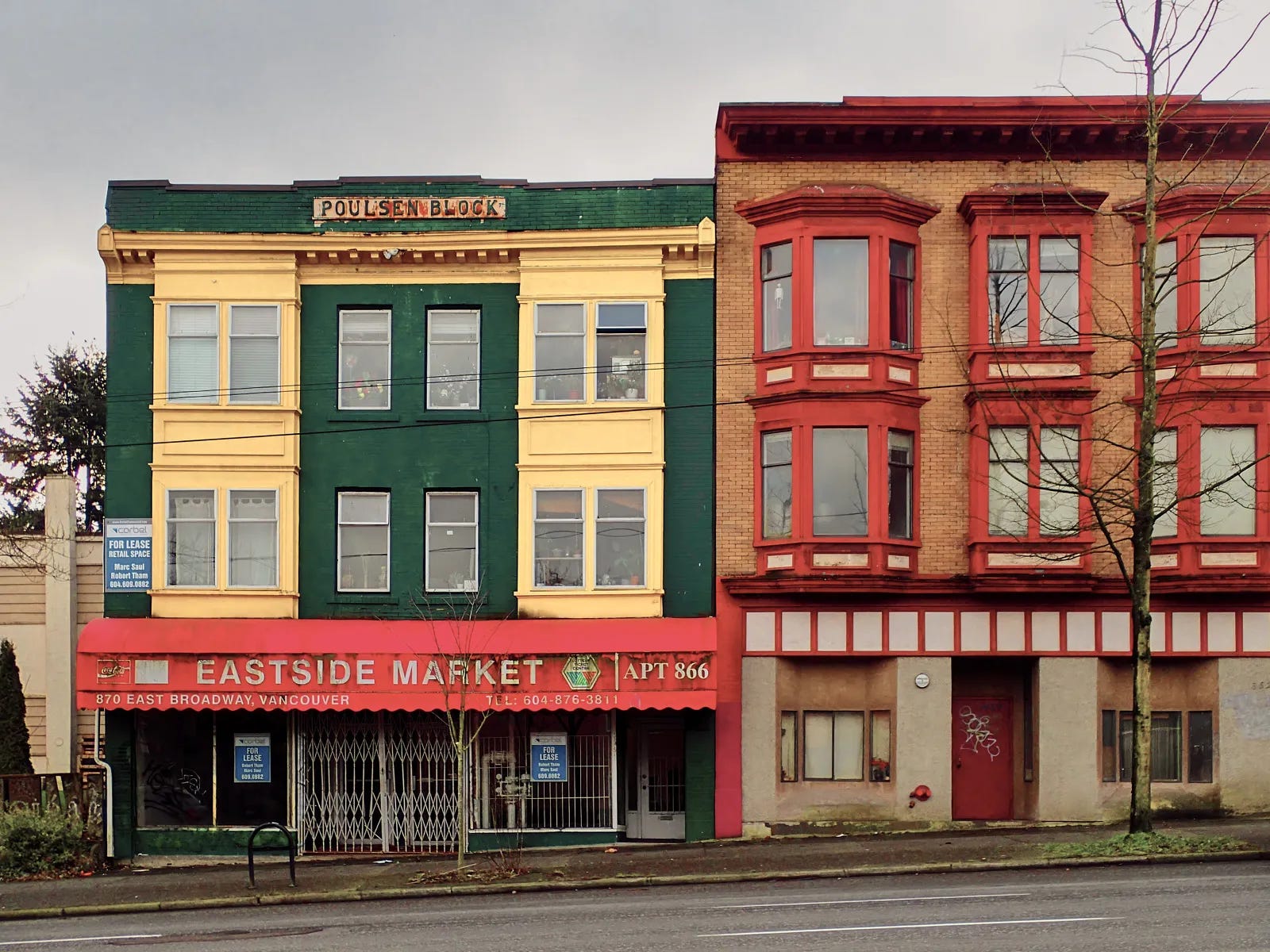
The actual building has undergone a paint job since this photo was taken, and the awning for Eastside Market is also gone. The building next to it does not bear a name, but shares the same window styles as The Manhattan, in downtown Vancouver.
In October 1917, little Thelma Marguerite Mills was born to newlyweds Russ and Mary. Thirteen months later, Thelma’s mother Mary died. I have found no pictures of either Mary or her daughter Thelma. I do not know the cause of death for Mary Elizabeth Parsons Mills.
Two years later, my Grandpa Russ remarried. There is very little written documents, other than marriage certificates and death certificates to tell us more about Mary or Thelma.
In my family photo album put together by my Mother and Father for each of their children, Thelma Marguerite is listed as Margaret Ann, which was actually the name of Russ’s mother, my Great Grandmother.
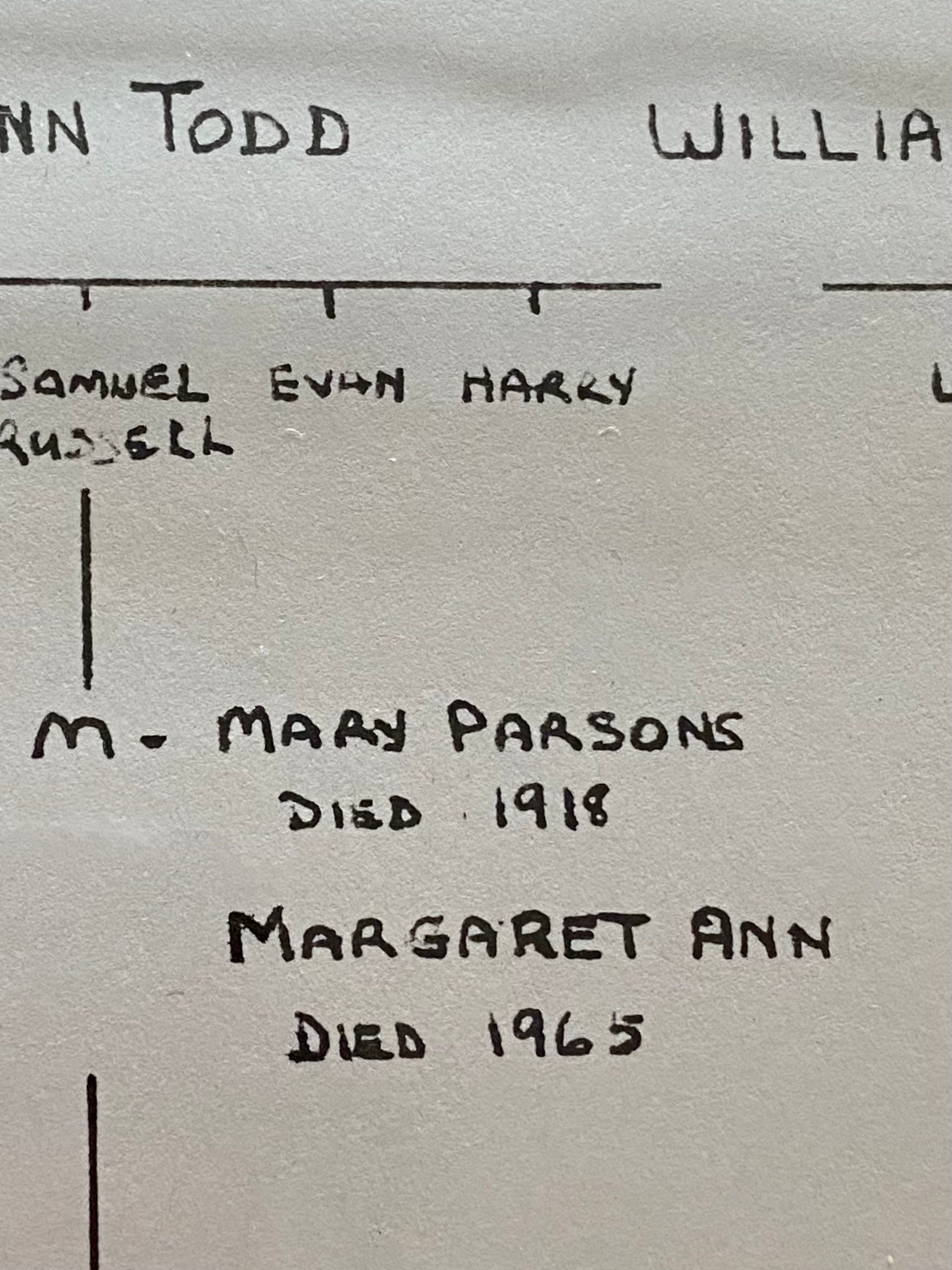
We can presume that at some point, most likely right after her Mother’s death, that Thelma went to live with Russ’s Mother Mary Ann Todd Mills and his “spinster” sister Olga, who the family affectionately called Aunt Sis. Olga is mentioned as a survivor in Thelma’s obituary in 1965. I have a letter from Aunt Sis, sent to my father when he was stationed at the HMCS Cornwallis, in Nova Scotia during the War. She was living at 1245 East 11th, at the time of this letter in 1944. In the obituary for Thelma in 1965, it was noted that she was survived by Olga, who was still living at the same address on East 11th.
In her letter to my father, Aunt Sis talks about her brother Harry, who she relates was finally getting married. “Mark you, I hadn’t the foggiest that he was even keeping company with any girl or woman, as I told him when I wrote that he had certainly kept it a deep dark secret.”
She went on to say,” Well, I hope he has chosen wisely. He sent me a snap and she seemed to have a nice sensible face, and not too young; personally I have always wished he would marry because jazzing about as he has been all these years is no good. I suppose marrying is somewhat of a gamble, yet when all is said and done, life is pretty much what we make of it, and marriage should be a partnership in the truest sense of the word.”
She goes on to tell some “shocky” news of a girl getting TB and a boy falling off a bike and being paralyzed, saying “you don’t have to go to war to get injured. “
Obviously, she and my Dad were close, as he chose to keep this letter from her for many, many decades.
From her death certificate and obituary, we know that Thelma died of pulmonary edema, and arteriosclerosis, heart conditions that run deep in my family history. My father died of congestive heart failure, which includes pulmonary edema, or drowning in your own body. At the time of her death, Thelma was just 47 and living in Coquitlam, at the mental facility known as Essondale, later renamed Riverview.
Unless you have documented history of your family, there is only so much information that can be gleaned from Vital Statistics. The one sure thing I know is that my Grandpa’s first wife, Mary Elizabeth, and their child Thelma, were never spoken about in our family.
Thelma was my dad’s half sister, as they shared the same father. Which makes Thelma my aunt, or more correctly, my half-aunt. She was not my cousin. She was not “once removed”, because in my family, she was never even mentioned.
Her grandmother, Mary Todd, my great-grandmother, died in 1930, when Thelma was 13. Aunt Sis sent her to Essondale in 1940, at the age of 23.
Little is known about Thelma. What was the exact nature of her mental condition? Was she born with problems or deficiencies, or did they develop later as a teenager or young adult?
Why was she sent there?
Unfortunately, I do not know. Common reasons given at the time for placement in mental facilities were schizophrenia, manic/depression, or mood disorders. Other reasons were people born with severe mental deficiencies, classified as idiots, imbeciles. the “R” word, and the like. In those days, these colloquial terms were not reserved for Presidents.
What we know from her death certificate, was that in 1940, Thelma was sent to Essondale, Hospital as it was called then. Essondale had opened its doors to woman in 1930, with a 675 bed Female Chronic Unit, (later called East Lawn) . She lived there until her death in 1965. In April of 1965, a month after her death, Essondale was renamed Riverview.
Fun fact: My current work location is about 12 minutes away from Riverview.
The real cost of mental health, or where do we put all these people?
Cost for keeping patients there was about $0.98 a day, when Thelma was sent there. In 2025, in patient psychiatric care is about $1000-2500 per day.
In 1937, the population has swelled to over 4000 patients.
In 1940, the Mental Hospital Act was amended, removing the terms ”lunatic” and “insane.”
What wasn’t removed was the fear of people with mental illness, and the desire to “have them all go away.” Out of sight, Out of mind.
Short steps on a sliding scale to the bottom.
“In 1933, British Columbia passed the Sexual Sterilization Act in 1933, an act that allowed the B.C. Eugenics Board to decide to sterilize people in government institutions. This could be done without the individual’s consent or knowledge.” “Historians estimate between 200 and 400 people were sterilized in British Columbia, and that many were patients of Essondale,” according to Coquitlam’s history of Riverview.
Treatments, and we use that term very loosely, included insulin shots to induce comas, part of what they called “sleep therapy”. Patients were put into deeper and deeper comas, often over weeks, then brought back with sugar solutions.
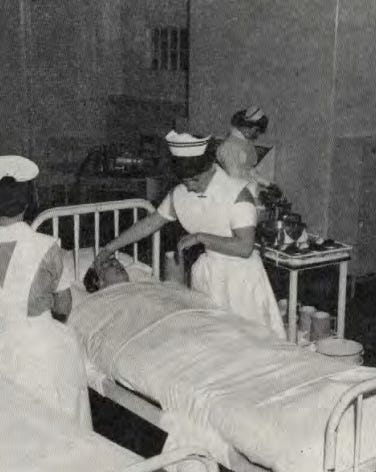
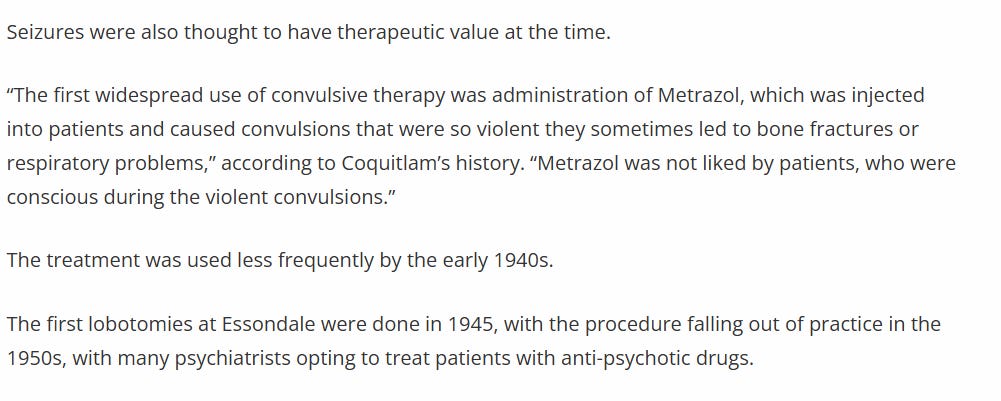
Seizures were also thought to have therapeutic value at the time.
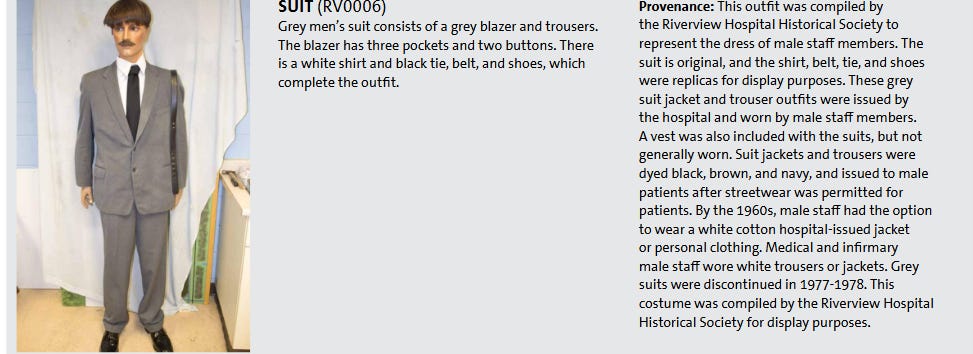
People in authority need to look like people in authority
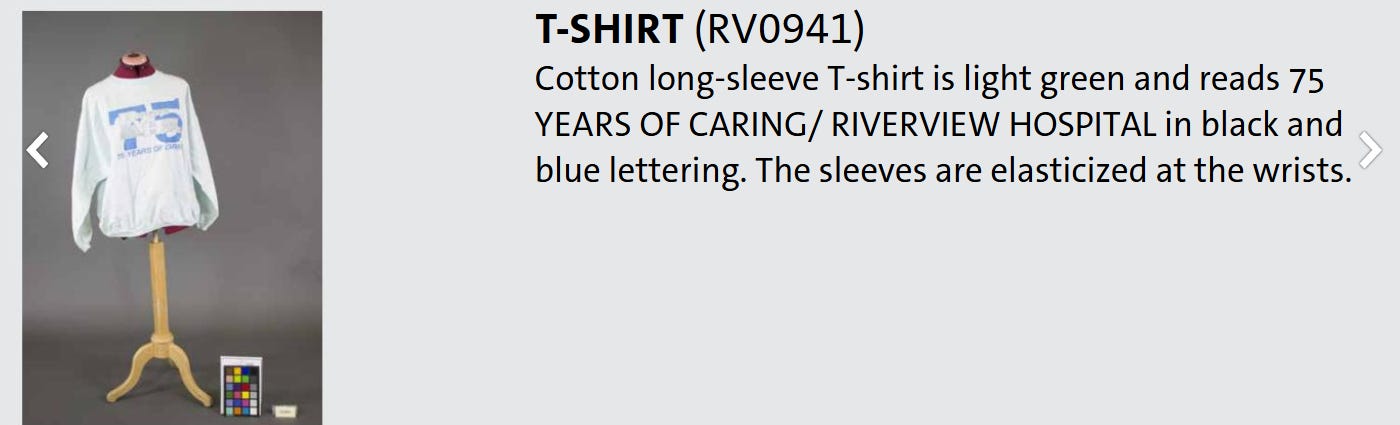
I spent 25 years at Riverview, and all I got was this lousy t-shirt.
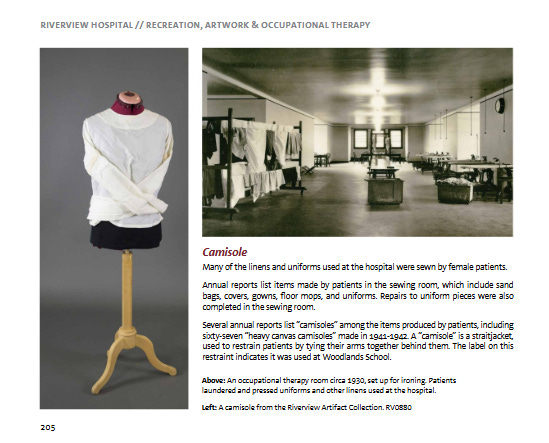
When she asks for a camisole, please do your research.
Some background information and sources:
Wikipedia:
Essondale, now known as Riverview Hospital, was established in 1913 in Coquitlam, British Columbia, as a mental health facility. Initially designed to house 480 patients, it grew to accommodate over 4,300 by the 1950s, and it was known for both its innovative treatments and controversial practices, including lobotomies and forced sterilizations, before closing in 2012.
A report commissioned by the City of Coquitlam: